Shipped · Oct 2023 – Jan 2024
Microfluidics droplet reactor
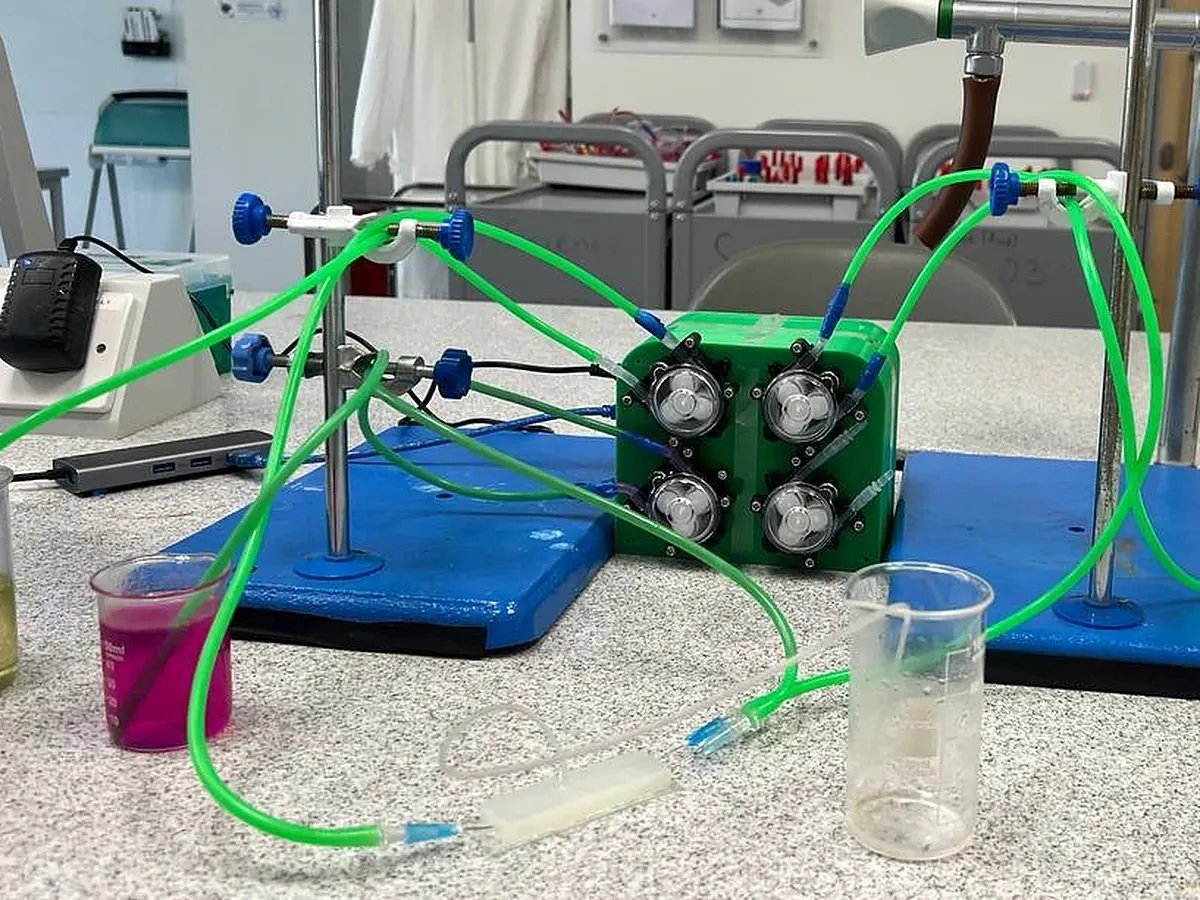
A droplet-based lab-on-a-chip with a four-channel Arduino-controlled peristaltic pump system. Designed to bring accessible microfluidics into educational labs without a cleanroom.
Shipped · Oct 2023 – Jan 2024
A droplet-based lab-on-a-chip with a four-channel Arduino-controlled peristaltic pump system. Designed to bring accessible microfluidics into educational labs without a cleanroom.
Microfluidics droplet reactor · the story
Scroll
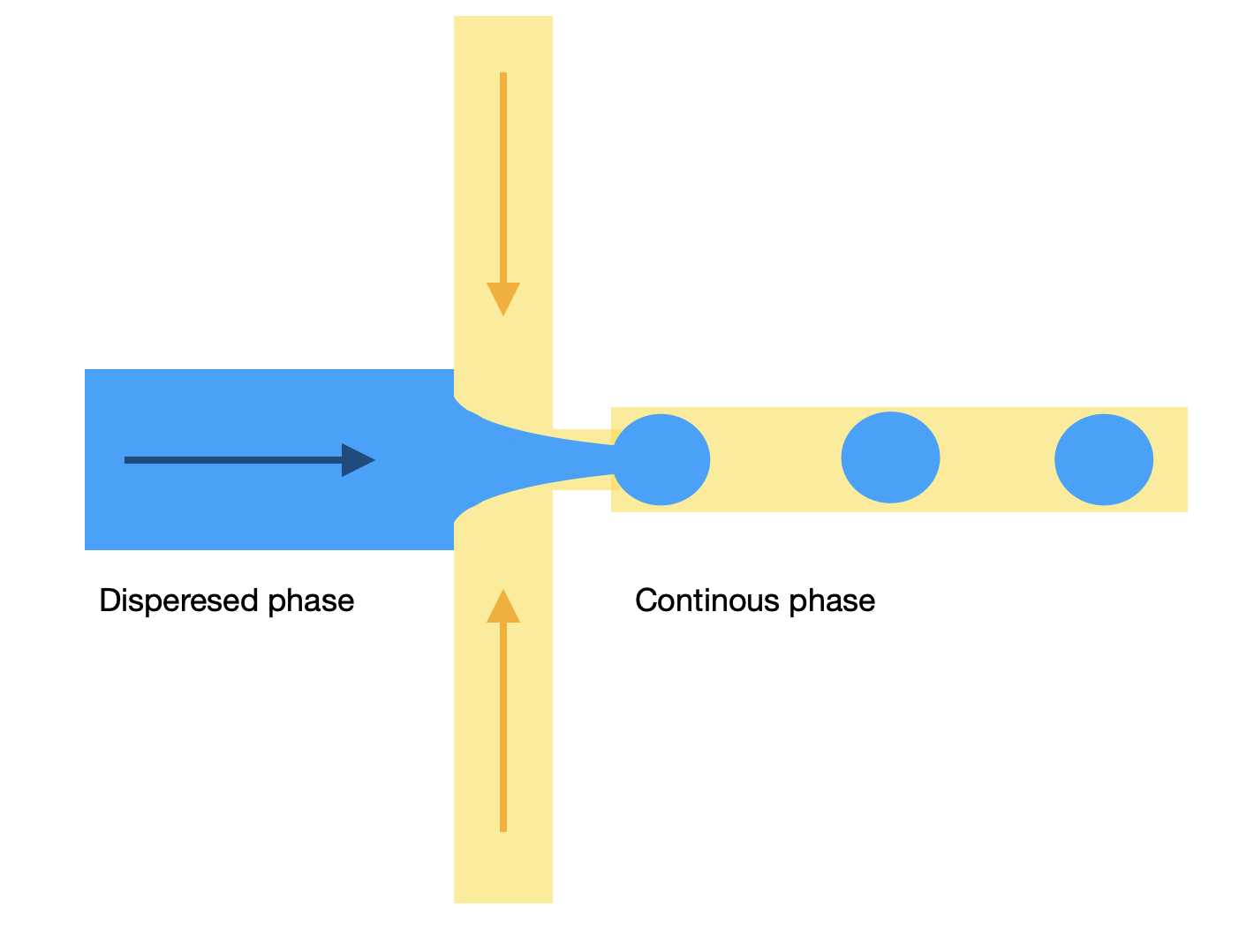
Planar flow focusing · drawn to scale
Oil from above and below pinches the reactant stream into droplets of 50–150 μm, carried on at 0.5–2 mm/s.
DESIGN
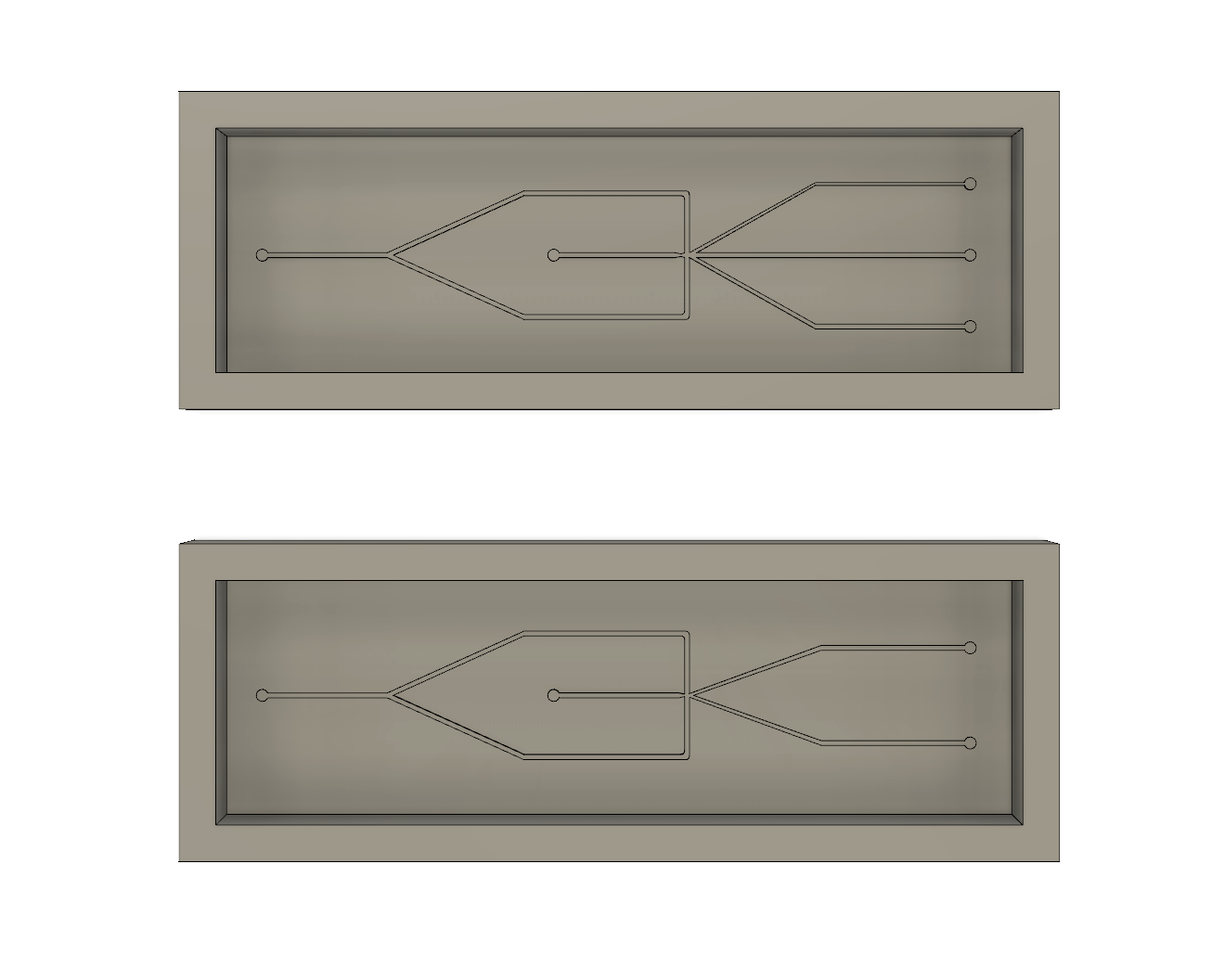
Fusion 360 model of the planar flow-focusing chip
master on an Anycubic Photon 2, up to 50 μm accuracy
POST
isopropanol wash, cure, 24 h rest before casting
CAST
PDMS Silagerm 8040 at 50 °C so the master keeps its shape
BOND
surface activation, inlets and outlets fitted
Then four pumps push oil and reactant through it while a microscope watches
Python + OpenCV on the microscope feed
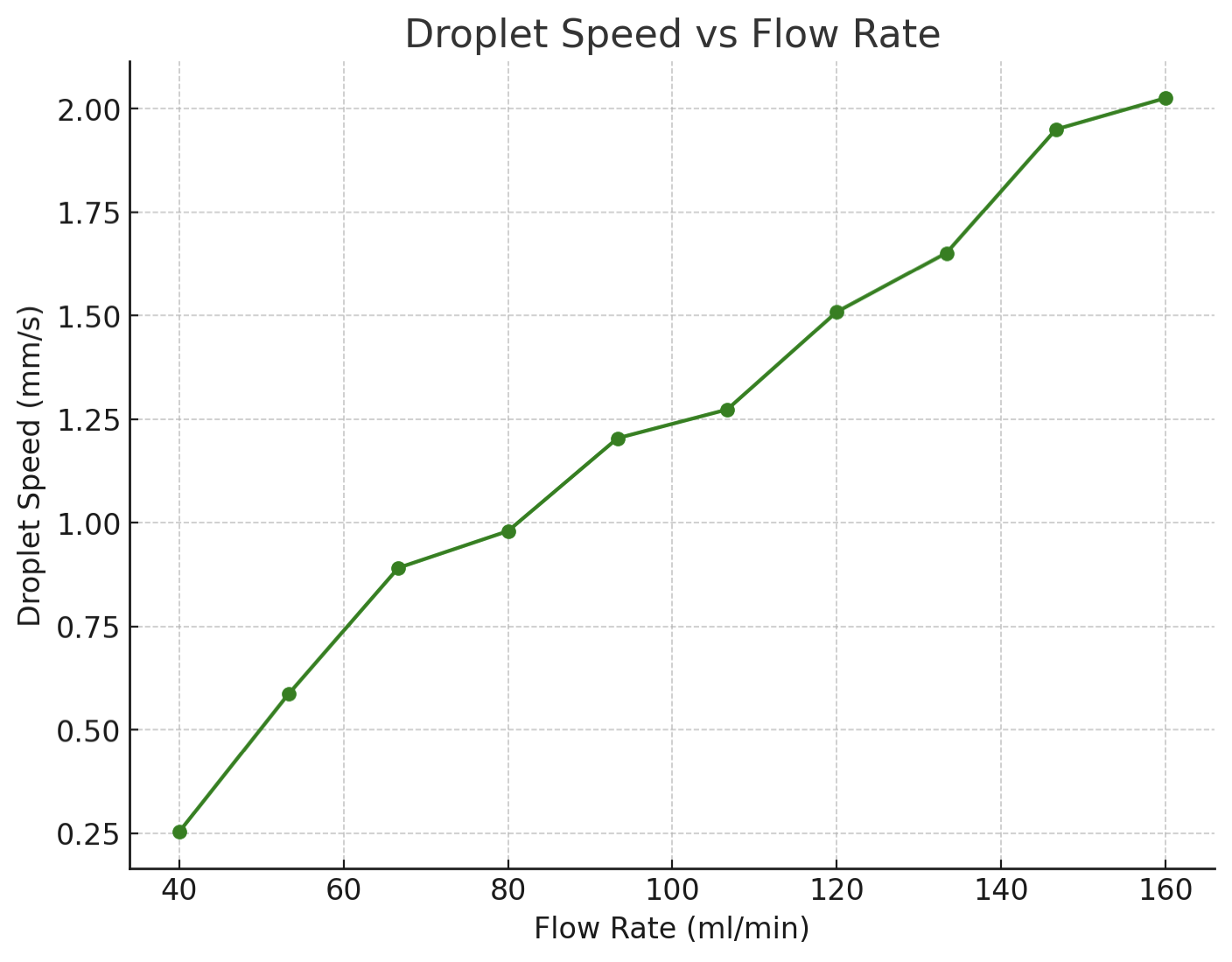
Ten pump settings from 40 to 160 ml/min move the droplets from 0.25 to 2.0 mm/s, nearly in proportion.
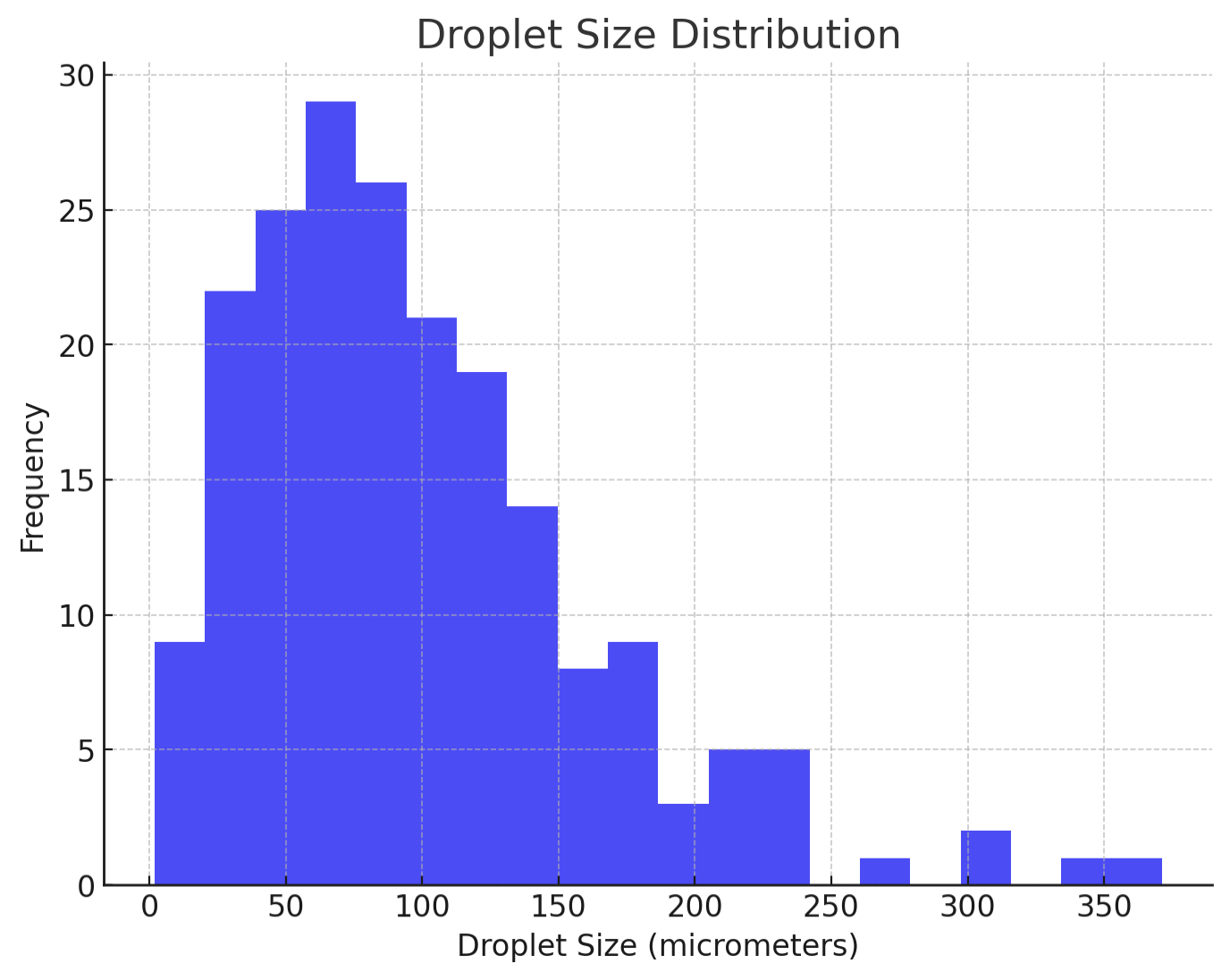
About 200 droplets measured. The bright bins are the 50–150 μm band the chip is designed for, where most of them fall.
Re-plotted from the write-up
Relative cost
Microfluidics droplet reactor · the write-up
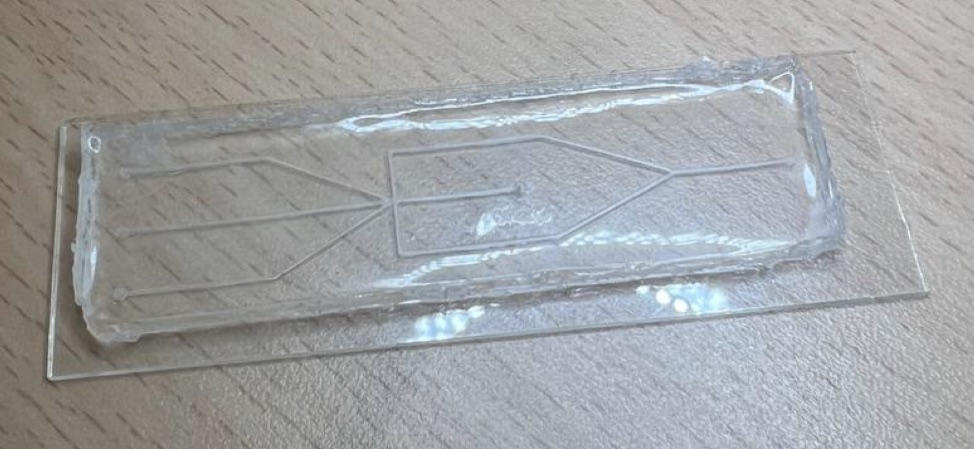
The chip is fabricated from PDMS cast over a 3D-printed master. We used an Anycubic Photon 2 LCD resin printer — accuracy down to ~50 μm in every axis, repeatable, and a fraction of the cost of a photolithography setup. The full pipeline: print the master → wash in isopropanol → post-cure → rest 24 hours → cast PDMS → activate and bond.
The PDMS is Silagerm 8040, a two-component silicone, cured at a reduced 50 °C. The temperature matters: at the standard ~80 °C, the resin master warps and the channel geometry drifts. Lower-temperature casting trades a longer cure for a master you can reuse cleanly. After bonding, inlets and outlets are surface-activated and tubed.
A traditional syringe pump runs hundreds of dollars per channel. Mine is a four-channel peristaltic pump in a custom 3D-printed enclosure, with Arduino PWM driving each motor. Flow rates are calibrated against the inlet profile the chip needs, and the four channels stay synchronised so the dispersed and continuous phases enter in the right ratio.
Total cost per pump unit, all components included, is about $48 — less than half a syringe pump and comfortably within an educational budget. The cost lever is what unlocks the rest: with a $300-ish resin printer plus ~$48 per pump channel, the entire reactor stops being "lab equipment" and starts being something a school can actually build.
Droplets are tracked in real time off a digital microscopy feed using a Python + OpenCV pipeline. The system extracts droplet boundaries frame by frame, tags each one through its trajectory, and outputs both speed and size distributions per run.
Across the full operating envelope, droplet velocity scales near-linearly with inlet flow rate, and the size distribution sits comfortably inside the 50–150 μm target. The reactor produces stable, characterisable droplets across all four channels at the speeds the educational use-case needs.
Real-time microscopy of droplets forming in the chip. Loops below.
The whole point of the project. PDMS lab-on-a-chip work is normally locked behind a cleanroom and a five-figure equipment bill. With the design here, a teacher with a resin printer, an Arduino, and roughly $48 of parts per pump channel can run real droplet experiments with their students. The procedure is reproducible from off-the-shelf components, end to end, and the digital-microscopy + computer-vision layer makes the analysis quantitative without requiring expensive proprietary software.
The full method is documented in the publication linked below. The system is also flexible enough to be adapted — different channel geometries, different fluids, different droplet-size targets — using the same fabrication pipeline.
End of Microfluidics droplet reactor